

Storytelling for the Future
Welcome to Insights & Opportunities: A Hub for Informal STEM Education! Insights & Opportunities is a twice-monthly newsletter for educators, administrators, legislators, and advocates who recognize the importance of informal STEM learning.
This newsletter is brought to you by me, Sarah Dunifon, and my team at Improved Insights. I’m a long-time STEM educator, researcher, and equity advocate. Along with my team, I now work on cutting-edge informal STEM learning research and evaluation.
Each edition of this newsletter offers exciting insights, resources, and opportunities for informal STEM learning professionals, including funding, jobs, professional development, informal STEM learning research, evaluation tips and resources, and so much more! We hope you find it valuable. Now, let’s get started.
Storytelling for the Future
In this month’s newsletter, Dr. Sarah Dunifon reflects on the future of storytelling for evaluators and the increasing role that digital and participatory storytelling will play. To read the full article, check it out in our Insights. In the meantime, here’s a taste:
–
As evaluators, we’re inherently investigators, facilitators, and storytellers. While most think of the process of evaluation as one that focuses on the collection and interpretation of data, the delivery of our findings is just as important. In this short piece, we’ll explore the idea of digital and participatory storytelling as the way of the future.
[...]
I’ve been thinking a lot about the next phase for effective storytelling. As evaluators, we may need to shift away from our traditional ways of communicating in favor of new and innovative methods, centering the question, “How can we best communicate with our audiences?” Moving into a digital and participatory future, where short-form videos, interactive displays of information, and co-created meaning reign supreme, it may be time to rethink how we communicate our work to others. This may include leveraging new technologies, incorporating more co-creation and participatory methods into the reporting and dissemination process, and co-defining meaning with participants in new ways that speak to how they process and make sense of experiences.
To read the full article, check it out in our Insights.
60-Second Suggestions
Here are a few of our favorite things this month, usually pertaining to informal STEM education and evaluation, but occasionally some fun personal stuff, too.
This paper, the culmination of a project led by Science for All, discusses the growing importance of citizen science in generating and applying scientific knowledge, and offers 10 recommendations to make the practice more inclusive, credible, and impactful. In alignment with its core recommendations, the study was co-produced with researchers, practitioners, and Indigenous participants.
Understanding Our Visitors: A Closer Look is a report produced by COVES that explores visitor perspectives on museums and museum experiences. The report dives into visitor demographics, their reasons for visiting, and how individual identities impacted their experiences. Most importantly, the report calls for museums to examine their culture to reach visitors of all backgrounds, socioeconomic levels, and identities.
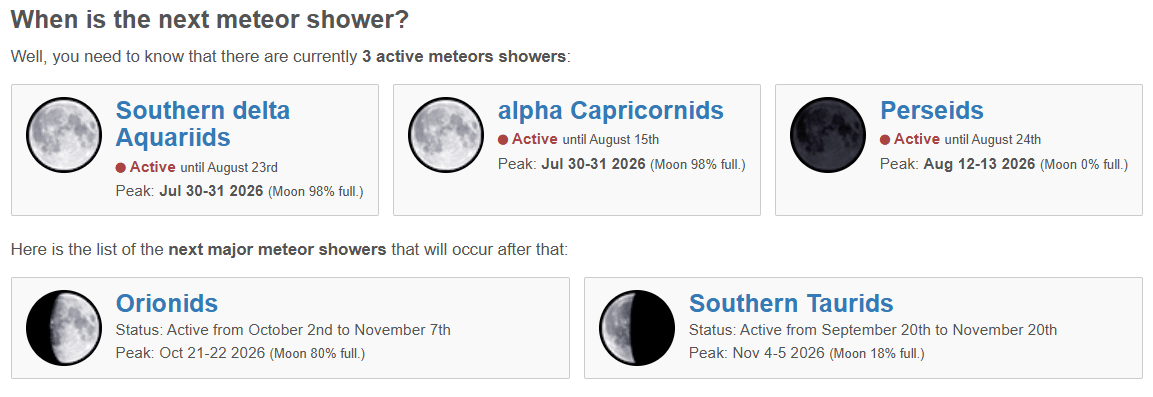
This page from the American Meteor Society tracks major upcoming meteor showers globally. The Perseids meteor shower is currently active in the northern hemisphere and will reach its peak on August 12 during the new moon, providing an optimal opportunity for stargazers to observe the shower.
Opportunities
Check out these new opportunities for the informal STEM learning community.

Funding:
2026 Grant Cycle, Hall Family Foundation, variable. Organizations in the greater Kansas City area are invited to apply for funding in three impact areas, including Growing Minds. Funding will focus on Pre-K, K-12, post-secondary, and out-of-classroom initiatives that address barriers to education and provide additional academic support. Applications are considered on a rolling basis.
Institutional Challenge Grant, William T. Grant Foundation, $650,000. Partnerships between research institutions and public agencies or nonprofit organizations focused on reducing inequality in youth outcomes are invited to apply for funding to support these research-practice efforts. Youth-serving areas can include education, justice, mental health, workforce development, and others. Applications are due September 9, 2026.
National Cancer Institute Youth Enjoy Science Research Education Program, National Institutes of Health, up to $400,000. Organizations, including nonprofits, school districts, institutes of higher education, and others, are invited to apply for funding to support research education activities that promote interest in biomedical research for students in grades 6-12. Proposed activities should focus on research experiences, curriculum or methods development, and outreach. Applications are due September 28, 2026.
Sanofi STEM Challenge Hosts, The Air We Share, up to $32,750 plus supportive materials. Science centers and museums are invited to apply to host a two-day “hackathon” event for youth to research, design, and pitch innovative solutions to local air quality issues as part of the Sanofi STEM Challenge. Participating organizations will receive up to $32,750, supplies, curriculum, template materials, tailored support, and the opportunity to coordinate and learn from other organizations hosting the challenge. An informational webinar will be held August 10, 2026, at 3:00 PM ET, and applications are due August 21, 2026.
West Michigan Youth Programs, The Gerber Foundation, up to $10,000. Nonprofits in the West Michigan region are invited to apply for grants to fund youth programming. Special emphasis will be placed on programs in the target areas of education (including STEM education), early childhood services and literacy, life experiences (agricultural science education, 4-H, FFA, etc.), among others. Submissions are due September 15, 2026.
Youth Service Capacity-Building Grants, William T. Grant Foundation, $60,000. New York City nonprofits that provide direct services to young people ages 5 to 25 are invited to apply for funding to address capacity-building needs that have been identified through a formal or informal assessment. The long-term goal of the program is to help build stronger, more stable youth-serving organizations that tackle inequality in youth outcomes. Applications are due September 17, 2026.

Jobs and Fellowships:
Executive Director, New England Air Museum (Windsor Lock, CT), $220,000. The Executive Director will lead initiatives that will shape the Museum’s future, including strengthening long-term financial stability, leading strategic planning, expanding the Museum’s leadership in STEM education and aerospace workforce development, and deepening partnerships throughout Connecticut’s aerospace ecosystem. Applications are due September 9, 2026.
Extension Associate, Cornell University Lab of Ornithology (Ithaca, NY), $82,000. The Extension Associate will manage Youth and Community Engagement for the Lab, both nationally and in international settings. Key responsibilities include strategic planning, partnership development, implementation, and evaluation of impact. Applications are due August 15, 2026.
San Luis Valley Outreach Fellow, The Nature Conservancy (San Luis Valley, CO), $29/hour. The San Luis Valley Community Outreach Fellow will support community engagement and outreach efforts at Zapata Ranch Preserve by coordinating events, meetings, learning opportunities, and partnerships. They will assist with volunteer engagement, help develop program materials, track program data, maintain records, and support other administrative processes. The fellowship is a 2-year, full-time program beginning in September 2026. Applications are due August 9, 2026.
School & Youth Program Manager, John Ball Zoo (Grand Rapids, MI), $57,000. The School & Youth Program Manager will manage school, youth, and community programming, including establishing and maintaining partnerships, and development, design, and direction of conservation educational efforts. They will lead the creation of programs and curriculum that align with state and local education standards and the Zoo’s conservation education goals.
Teen Science Cafe Fellows ‘26-’27, STEM Next Opportunity Fund (hybrid), $2,500 stipend. Teen Science Cafe (TSC) Fellows will work one-on-one with TSC Network Guides to launch the program at their site and host three Cafe events during the program period, in addition to virtual cohort meetings and more. The opportunity is designed for programs that already have connections with youth, with established community partnerships and access to a consistent group of teens who can participate in and help lead TSC experiences. The Fellowship runs from September 2026 through June 2027, and applications are due August 17, 2026.

Professional Development:
2026 MAAM Annual Conference, Mid-Atlantic Association of Museums (MAAM), October 6-8, 2026 (New Brunswick, NJ). The Mid-Atlantic Association of Museums (MAAM) will host its annual conference October 6-8, 2026, at Rutgers University. The conference is dedicated to fostering excellence in museums by providing high-quality professional development, networking opportunities, and special events for museum professionals in the region. Early bird rates are available through September 4, 2026.
Call for Applicants: Editor in Chief of Citizen Science: Theory and Practice (virtual). The Association for Advancing Participatory Sciences invites applications for new editorial leadership of the Citizen Science: Theory and Practice journal. The journal is an online-only, open-access, peer-reviewed publication focused on advancing the global field of practice by providing a central space for scholarly communications across multiple disciplines. The Editor in Chief will lead and grow the editorial team to ensure top-quality, timely publications, and plan and implement strategies to enhance the journal’s profile and reach. The editor(s) will receive an annual stipend of $4,000-$5,000, dependent on editorial structure. Applications are due August 15, 2026.
NAAEE 2026: Imagine If...North American Association for Environmental Education (NAAEE), October 6-9, 2026 (Portland, OR). NAAEE invites environmental education professionals to join them October 6-9, 2026, in Portland, OR, to explore the conference theme, “Imagine If...” Participants will look beyond current constraints and consider what becomes possible when education drives connection, action, and positive change. Early bird registration is available through August 21, 2026.
Webinar: Building AI Literacy for Inclusion in STEM: Resources and Strategies from a National Landscape Study, National Girls Collaborative Project (NGCP), August 19, 2026 at 12:00 PM ET (virtual). Join NGCP to explore the current state of AI literacy and learn about resources for exploring AI in STEM learning environments safely, effectively, and ethically. The webinar will share findings and recommendations from a national landscape study conducted as part of the Building AI Literacy for Inclusion in STEM initiative. The 90-minute webinar will take place on August 19, 2026, at 12:00 PM ET.
Thanks for tuning in to this edition of Insights and Opportunities. While you’re waiting for the next edition, tell your friends! We appreciate you sending along a blog post you enjoyed, a job opportunity you think a friend should apply for, and resources you found valuable. Sharing this newsletter is the best way to support this work. Until next time - thanks!
